The dictionary module consists of 4 hierarchical types of objects:
- Sources,
- Containers,
- Structures,
- Fields.
These objects are divided into 4 main categories of sources:
1. Databases
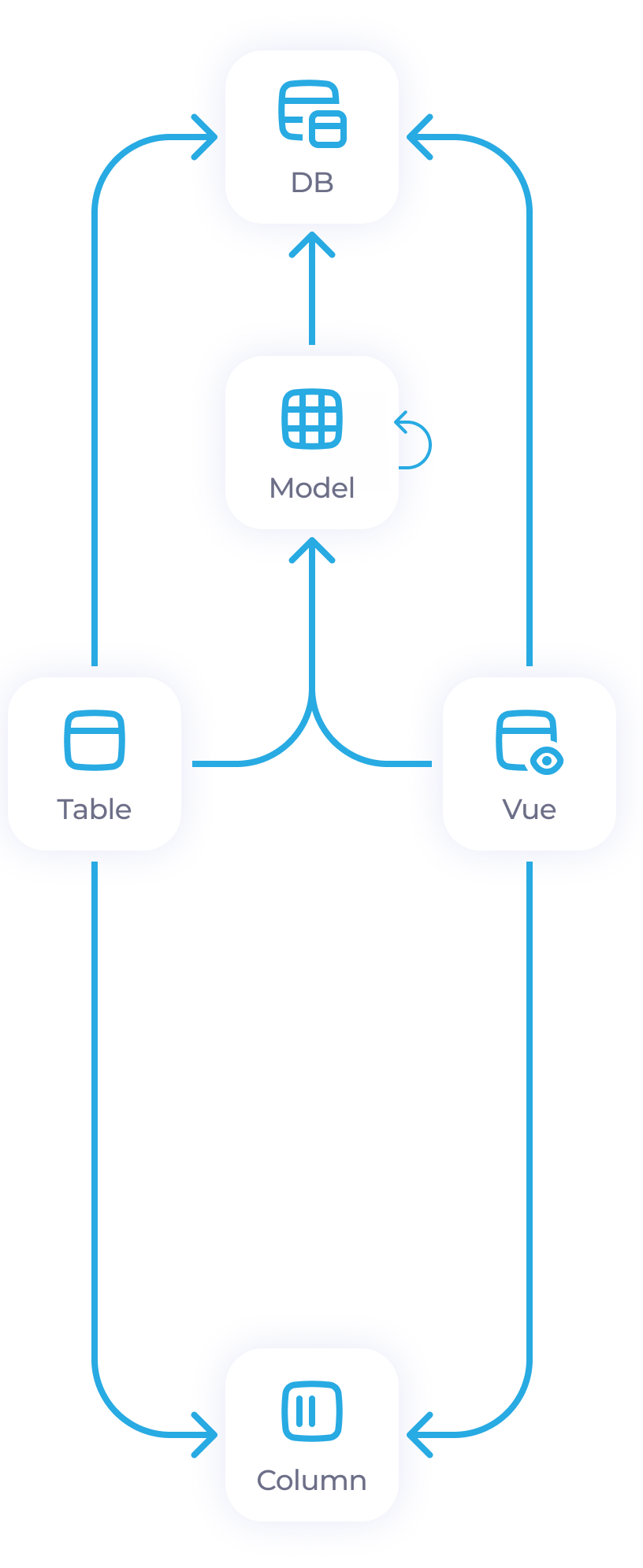
- Database (source): corresponds to structured (relational) data sources.
- Model (container): Abstractly describes how the data is represented in a database.
- Table (structure): a set of data organized represented by columns.
- View (structure): synthesis of a query request for the database. It can be seen as a virtual table, defined by a query.
- Columns (field): correspond to categories of information in a table.
2. Filestores
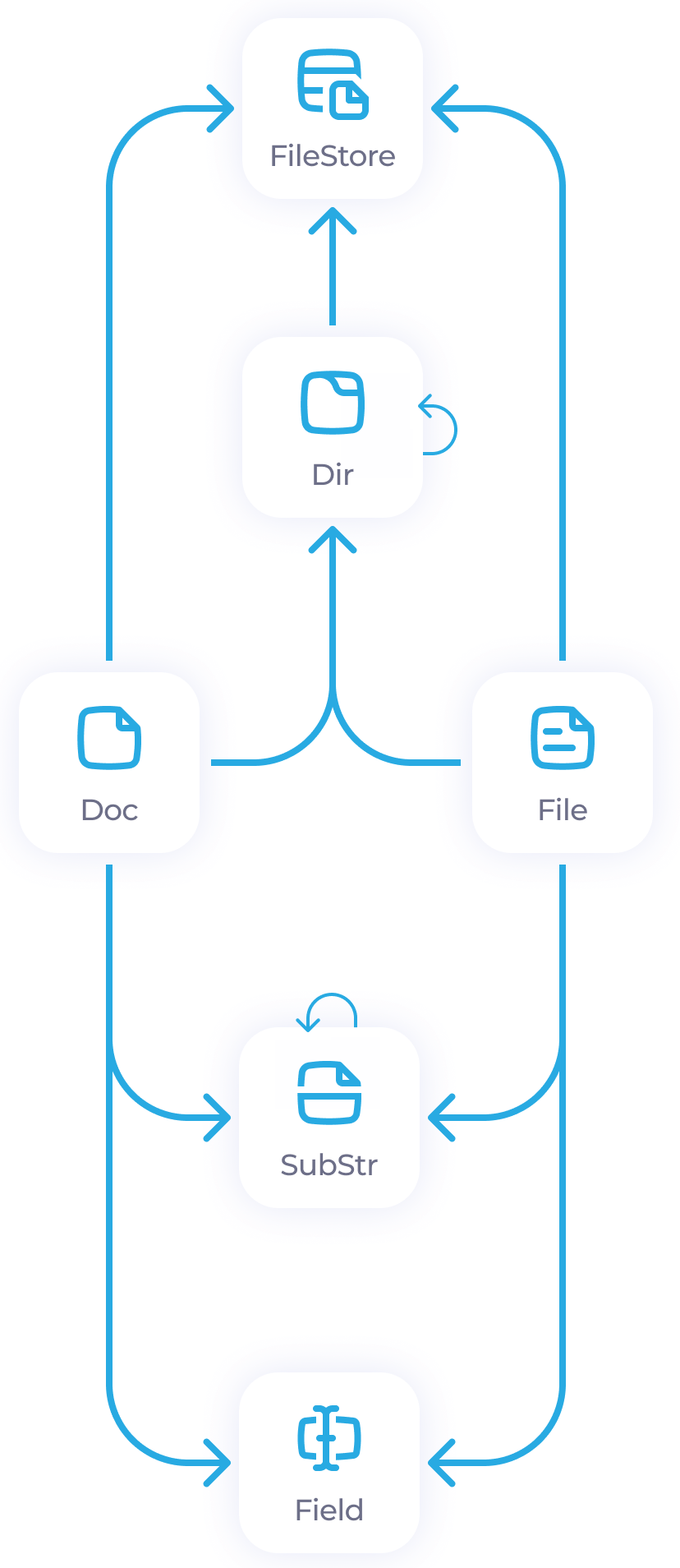
- FileStore (source): corresponds to data sources organized into files.
- Directory (container): (or folder) is a list of file descriptions.
- File (structure): corresponds to a physical file on the disk or file system.
- Document (structure): corresponds to a physical or logical file, such as in an elastic search for example.
- Substructure (structure): allows the representation of complex hierarchical structures.
- Fields (field): basic information of a database, a file, and more generally of a computer resource.
3. NoSQL sources
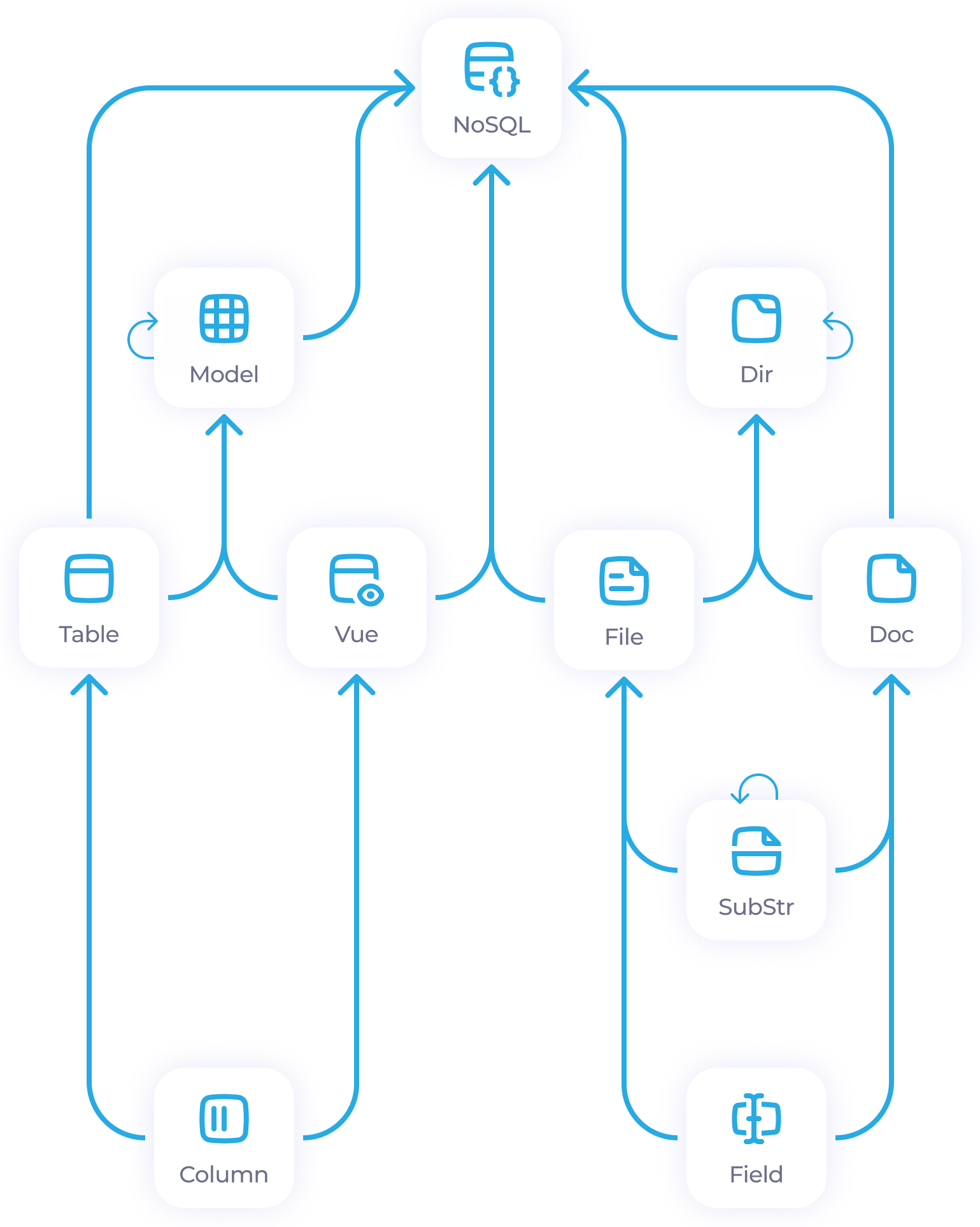
- NoSQL (source): corresponds to the type of data source to use for your hybrid sources.
- Directory (container): (or folder) is a list of file descriptions.
- Model (container): Abstractly describes how the data is represented in a database.
- Table (structure): a set of data organized represented by columns.
- File (structure): corresponds to a physical file on the disk or file system.
- Document (structure): corresponds to a physical or logical file, such as in an elastic search for example.
- View (structure): synthesis of a query request for the database. It can be seen as a virtual table, defined by a query.
- Substructure (structure): allows the representation of complex hierarchical structures.
- Columns (field): correspond to categories of information in a table.
- Fields (field): basic information of a database, a file, and more generally of a computer resource.
4. Tag bases
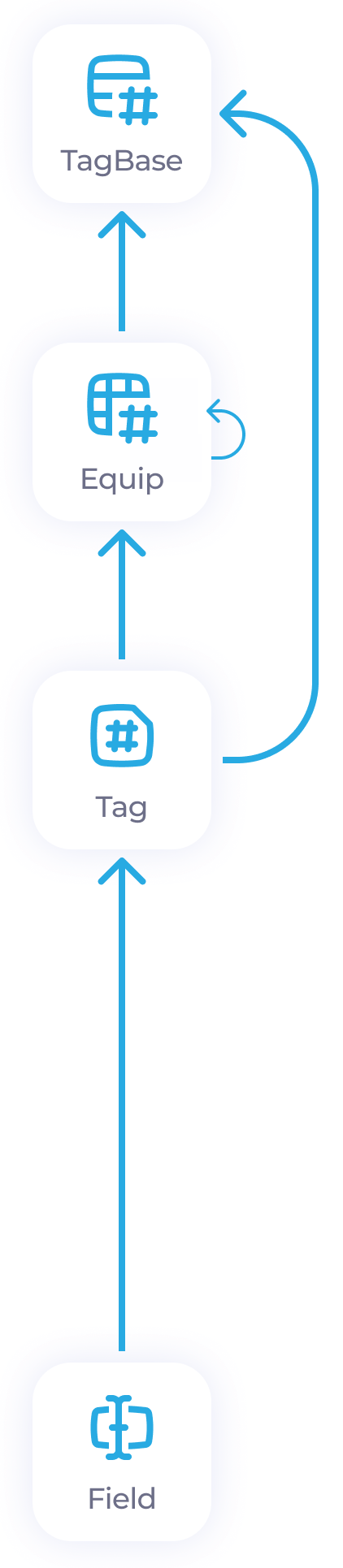
- Tag Base (source): corresponds to data sources in the IoT world.
- Equipment (container): any connected equipment that can report information.
- Tag (structure): describes a characteristic of the object and allows an easy grouping of information containing the same keywords.
- Fields (field): basic information of a database, a file, and more generally of a computer resource.