
This article presents our approach to measuring Data Catalog maturity. It analyses how to apply a model in your company, communicate around it and evaluate the results. We will be able to understand the importance and the power of this approach to factualize the actions to be taken during the implementation of your Data Catalog initiative.
Our model
If we take the CMMI/DAMA approach, we can see that Data Governance is based on many themes: architecture, data analysis, storage, security...
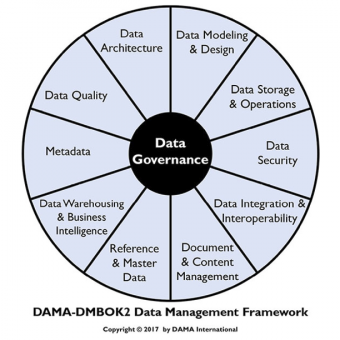
DataGalaxy addresses the MetaData management part, i.e. the data cataloguing.
It is necessary to be able to objectify the deployment of a data catalog. Thus, we have been strongly inspired by these maturity models to develop our own vision on the maturity of your data cataloging process.
Our model is based on an observation: a data cataloguing approach can only be successful if our two axes are taken into account:
- The first axis is asset maturity, which reflects the knowledge of the data from a technical and functional point of view in your company
- The second axis is cultural maturity so that each actor understands his role and responsibilities within the data value chain.
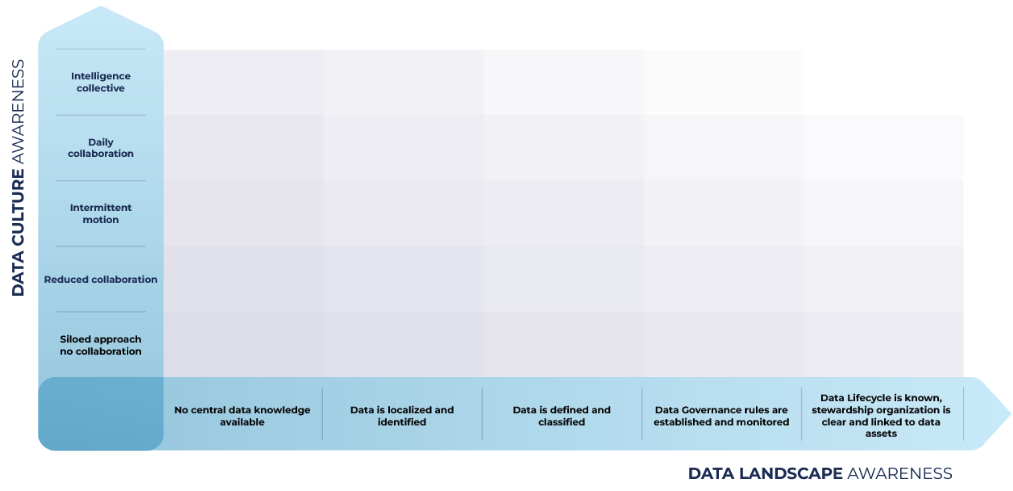
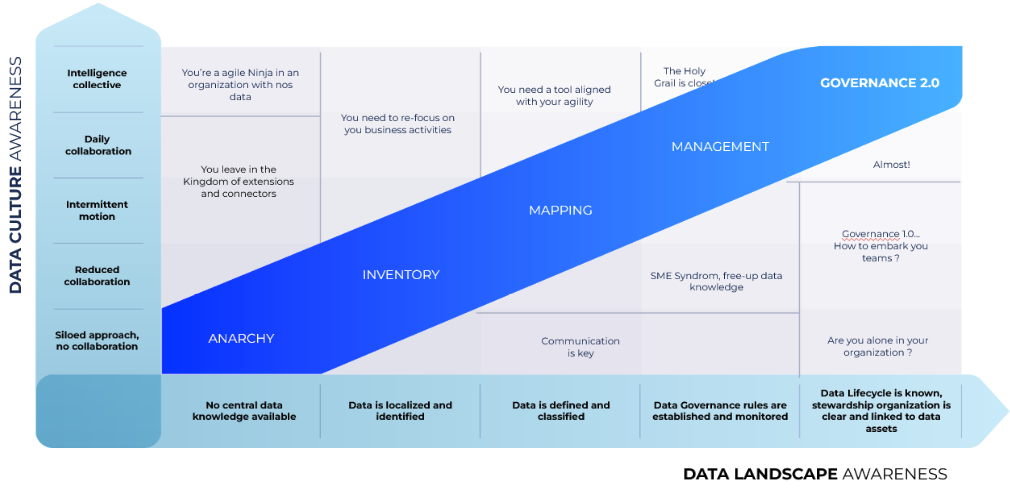
Based on our experience and interactions with our customers, we were able to deduce the different levels of maturity of a data catalog approach
- Anarchy: no catalog, little or no identified data role in the company
- Inventory: the businesses perceive the need to understand the data and certain business lines or initiatives address this point.
- Mapping: we are gaining in maturity, your data catalog is enriched with definitions and/or contextualizations. The beginnings of a data organization are taking shape in the company. We communicate on the importance of data
- Management: data teams are in place, management rules are defined, measured and communicated. Data is at the heart of your business
- Governance 2.0: it is not an end in itself. This level is the culmination of your first iteration and will become your new baseline to initiate the virtuous circle of continuous improvement around data.
Maturity assessment
To evaluate your maturity on these two axes (and thus position you in our model), we apply the same approach as for the Data Governance maturity models: a series of indicators showing your level of maturity. These indicators are used in your survey or poll as evaluation points
For example, "Are all the attributes of my business terms met?" and a response scale from 0 to 5 (where 0 is never and 5 is always). Depending on the score obtained, you can position yourself on your maturity scale and take the right actions to evolve.
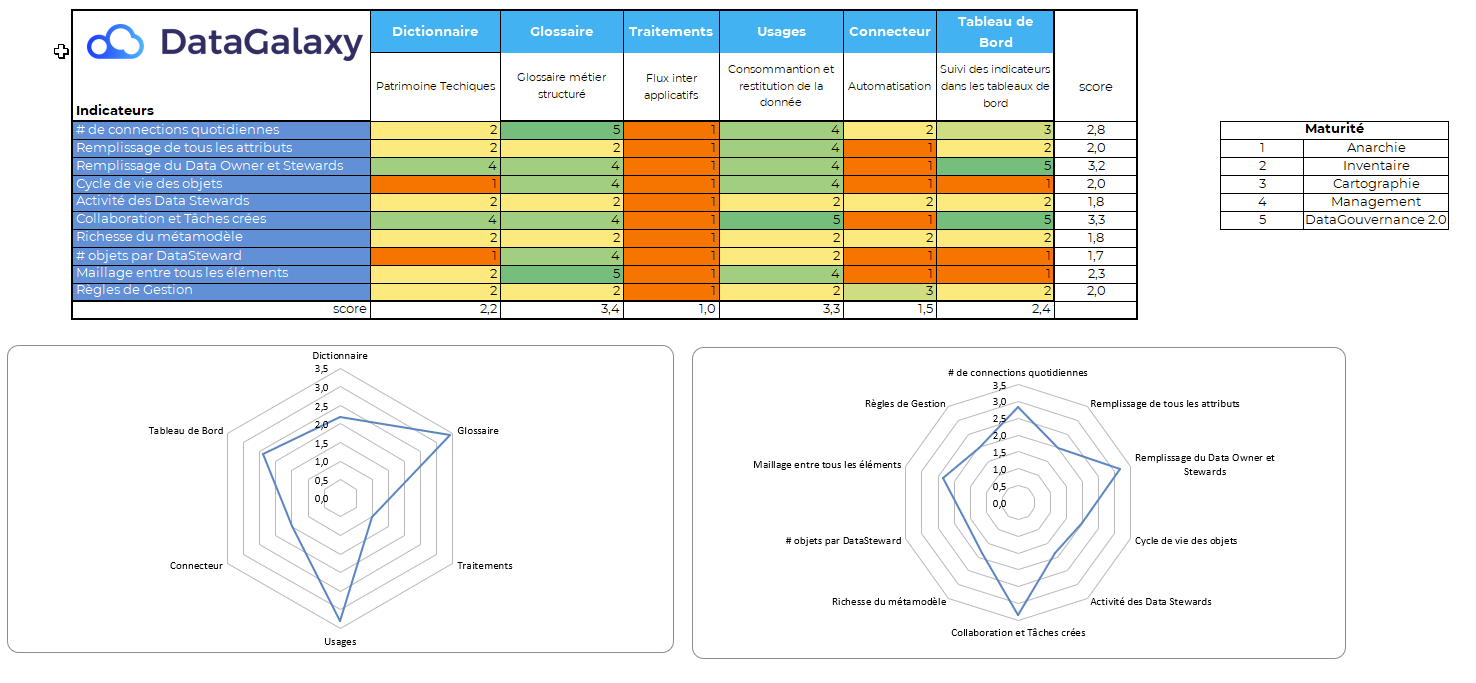
You will get a view of the maturity of your data catalog approach that can be shared through your various communication channels!
In this example, we clearly see a business data catalog where the glossary and uses are priorities, but there are still avenues of evolution with the documentation of technical aspects.
Operating
In the same way as for the data governance maturity assessment models, the catalog approach maturity assessment model will allow you to :
- Make your approach factual
- Identify improvement areas more easily. Indeed, both approaches (data governance and data catalog) are really part of an iterative approach of continuous improvement of your business processes.
- Facilitate comparison between organizations with similar needs and constraints
We can tell you that the majority of the companies we work with or prospects we deal with are around the inventory level. Of course, this is an average. Some sectors (banking, insurance) are ahead.
Note : this article is a simplified version of this article , published by Laurent Dresse on September 9, 2021