Modeling the glossary can be complex at first. Indeed, how can you know exactly in which grouping a business term, an indicator or a concept will be classified?
In order to keep the mapping process moving forward, we suggest two main steps to model your glossary
First step: Sequencing the classification operations
This consists of starting with a flat view where you will have to
- Identify all the elementary units: business terms, indicators, dimensions.
- Build "large mesh" repositories: i.e. universes with generically named concepts to classify indicators
- Create specific concepts in order to classify the elementary units according to your context, within the repositories
Second step: Manage the life cycle of your object.
Modeling is one thing, knowing that you are viewing a correctly filled-in object is another
To do this, all you need to do is use the object's life cycle, i.e. its status. Several are available
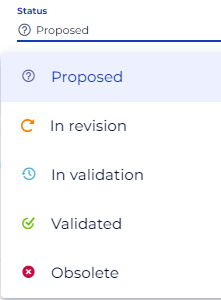
These life cycles are also interesting in that they can be used to limit the editing rights: thus if any steward having writing rights can modify an object with "proposed" status, it will not be the same for "validated" objects for which only the owner will be able to proceed to modifications. To know more about it you can read this article cet article
Sequencing
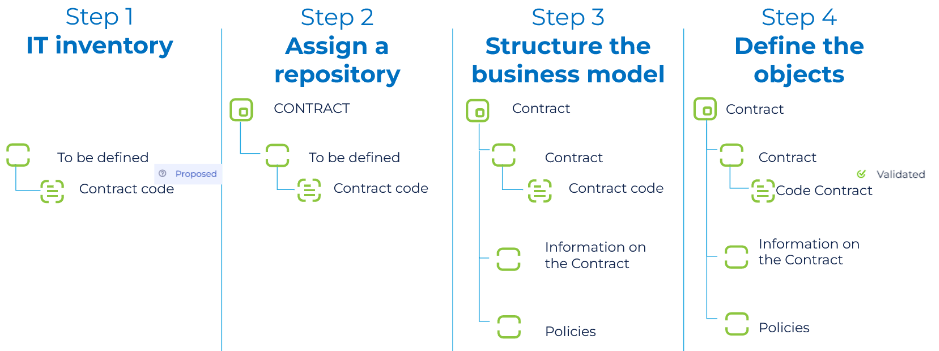
In practical terms, this refinement process can take this form:
- The first step is to identify the main objects and possibly create first groupings (with the concept object) in order to limit the infinite object list effect. The objects remain in the "proposed" status in order to start the mapping work.
- The second step consists in creating the first repositories. To do this, we can use the universe object and attach different concepts to it.
- The third step allows a better distribution of the objects by creating more detailed concepts. You can consultthe following articlefor some good practices of readability
- For the last step, you have to identify the objects whose definitions are authentic. For this you can use the comments metabot to make votes.